
ByJohn A
Do You Need 240V for a Sauna Heater? A Wiring Primer
Most traditional electric sauna heaters rated 4.5 kW and above need a dedicated, hardwired 240V circuit, while smaller heaters and infrared panel systems under roughly 1.5 to 1.7 kW are often built for a standard 120V outlet. Here is what determines which category a given heater falls into, and what the wiring actually involves once the voltage requirement is confirmed.
1. Check the heater’s kW rating first
Voltage requirement tracks almost directly with power draw. A heater under about 1.5 to 1.7 kW, common for infrared panel systems and the smallest traditional units, typically pulls a low enough amperage to run on a 120V, 15 to 20 amp circuit with a standard plug. Once a heater climbs into the 4.5 kW and up range, which covers most traditional electric heaters sized for a real two to four person room, the amperage draw at 120V would be too high for a standard household circuit to handle safely, so manufacturers build these units for 240V instead, which cuts the amperage roughly in half for the same power output.
2. Read the nameplate, not just the marketing copy
Every heater ships with a nameplate, usually mounted on the unit or printed in the installation manual, listing the exact voltage and amperage it draws. This is the number an electrician needs, not a rough kW estimate pulled from a product listing. Two heaters advertised at the same kW rating can have slightly different amperage draws depending on efficiency, and the nameplate is the only reliable source for sizing a breaker correctly.
3. Confirm the panel has room for a new circuit
A dedicated 240V circuit for a mid-size heater typically needs a 30 to 50 amp double-pole breaker, which takes up two slots in the electrical panel. Older panels, or ones already near capacity from other large appliances, may not have room without a subpanel or a service upgrade. Checking available panel capacity before ordering a heater avoids finding out mid-project that the wiring costs more than expected because of a panel limitation nobody accounted for.
4. Expect a licensed electrician for the 240V run
Most local codes require a dedicated appliance circuit like this to be installed or at minimum inspected by a licensed electrician, and this is not the kind of wiring most homeowners should attempt themselves. The work typically involves running 8 or 6 gauge copper wire from the panel to the heater location, sized to the heater’s amperage draw and the length of the run, plus a properly rated disconnect switch near the heater in many jurisdictions. Getting this wrong is not just a code violation, it is a genuine fire risk given how much current a heater circuit carries.
5. Plan the heater location before the electrician arrives
Deciding exactly where the heater will sit, including which wall and how far from the door, before the electrician runs wire saves a second visit if the layout changes later. The heater also needs its manufacturer-specified clearance from benches and walls respected in that location, which sometimes shifts the ideal spot for the electrical run by a foot or two from where it might otherwise go.
6. Small heaters and infrared: the 120V exception
Not every setup needs to go through the 240V process. Infrared panel systems and the smallest traditional heaters, generally those under 1.5 to 1.7 kW, are often designed specifically to run on a standard 120V, 15 to 20 amp circuit with a regular plug, sometimes even an existing outlet if it is not shared with other high-draw appliances. This makes them a meaningfully simpler installation for anyone who wants to avoid an electrician visit entirely, at the tradeoff of lower peak heat output and a longer warmup than a larger 240V unit typically delivers.
7. Outdoor cabin wiring has extra requirements
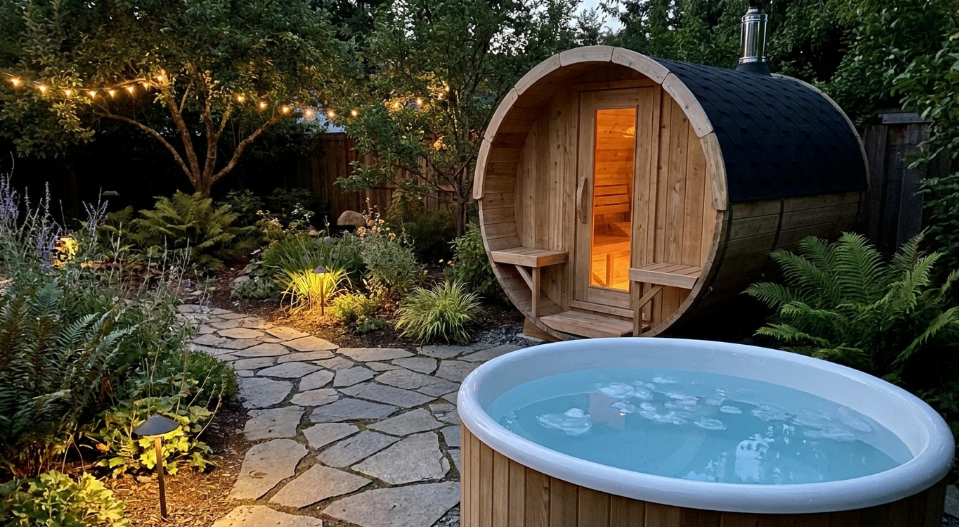
A heater installed in a detached backyard cabin rather than an indoor room adds a few requirements on top of the standard 240V circuit. The run from the house panel to the cabin typically needs to be buried at code-required depth or run through weatherproof conduit if above ground, and most jurisdictions call for a GFCI or GFPE-protected breaker on circuits feeding outdoor structures, given the combination of electricity and a space that sees moisture from bathers and, in some layouts, an adjacent cold plunge. A weatherproof, in-use rated disconnect switch mounted near the cabin is also common, giving a way to cut power to the heater without going back to the main panel. These add cost and complexity beyond an indoor install, which is worth budgeting for separately when pricing out an outdoor cabin project.
8. Budgeting for the electrical work itself
The heater’s price tag is only part of the total cost when 240V wiring is involved. A straightforward indoor run to a panel with available capacity might add a few hundred dollars in labor and materials, while a longer outdoor run, a subpanel, or a service upgrade because the existing panel is full can push the electrical portion of the project well past that. Getting a quote from a licensed electrician before finalizing a heater purchase, rather than after, avoids the common surprise of a heater sitting in a box while the wiring budget gets sorted out.
Buyers comparing heater models by voltage requirement before contacting an electrician can check what is in stock at specialty retailers such as SweatDecks, where amperage and circuit requirements are usually listed alongside the kW rating on the product page rather than buried in a separate manual.
Frequently Asked Questions
Do all sauna heaters need a 240V circuit?
No. Small heaters and infrared panel systems under roughly 1.5 to 1.7 kW are often built for a standard 120V circuit, while traditional electric heaters in the 4.5 kW and up range almost always require a hardwired 240V circuit.
Can a homeowner wire a 240V sauna circuit themselves?
Most jurisdictions require this type of work to be done or inspected by a licensed electrician, since it involves a dedicated double-pole breaker and correctly sized wire, and an improperly wired heater circuit is a real fire risk.
How do I know what amperage breaker my heater needs?
The heater’s nameplate, usually on the unit itself or in the installation manual, lists the exact voltage and amperage draw. That number, not a rough kW estimate, is what an electrician uses to size the breaker and wire gauge.
What wire gauge is typical for a 240V sauna heater circuit?
Commonly 8 or 6 gauge copper wire, depending on the heater’s amperage draw and the length of the circuit run, though the exact gauge should always be confirmed against the heater’s nameplate rating and local code.
References
- “Clinical Effects of Regular Dry Sauna Bathing: A Systematic Review.” Evidence-Based Complementary and Alternative Medicine, 2018. https://pubmed.ncbi.nlm.nih.gov/29849692/
- “Benefits and risks of sauna bathing.” The American Journal of Medicine, 2001. https://pubmed.ncbi.nlm.nih.gov/11165553/
- “Effects of heat and cold on health, with special reference to Finnish sauna bathing.” American Journal of Physiology – Regulatory, Integrative and Comparative Physiology, 2018. https://pubmed.ncbi.nlm.nih.gov/29351426/
